

Unlocking Inner Potential: A Journey to Manifestation and Joy with Spiritual Coach Latha Jay
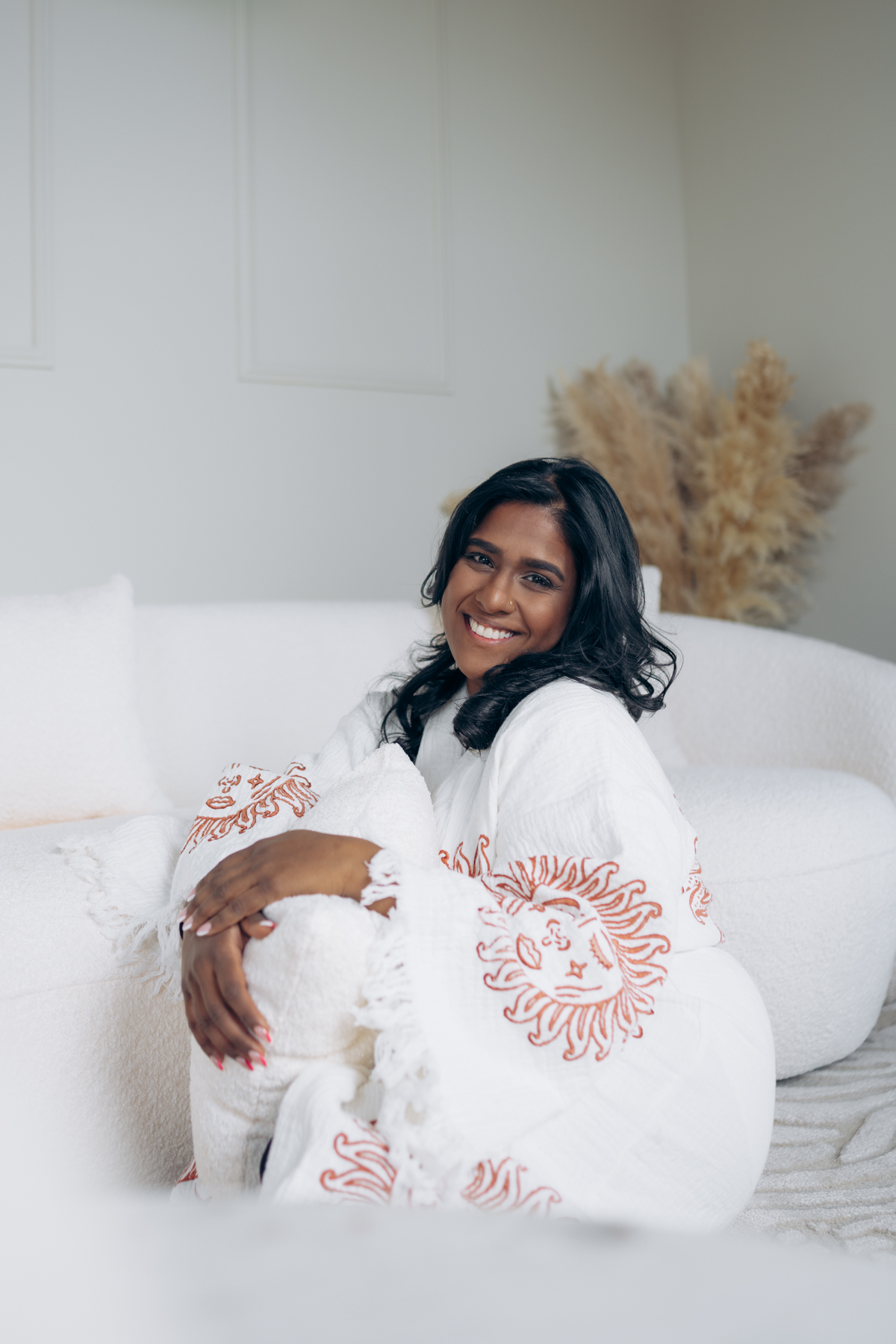
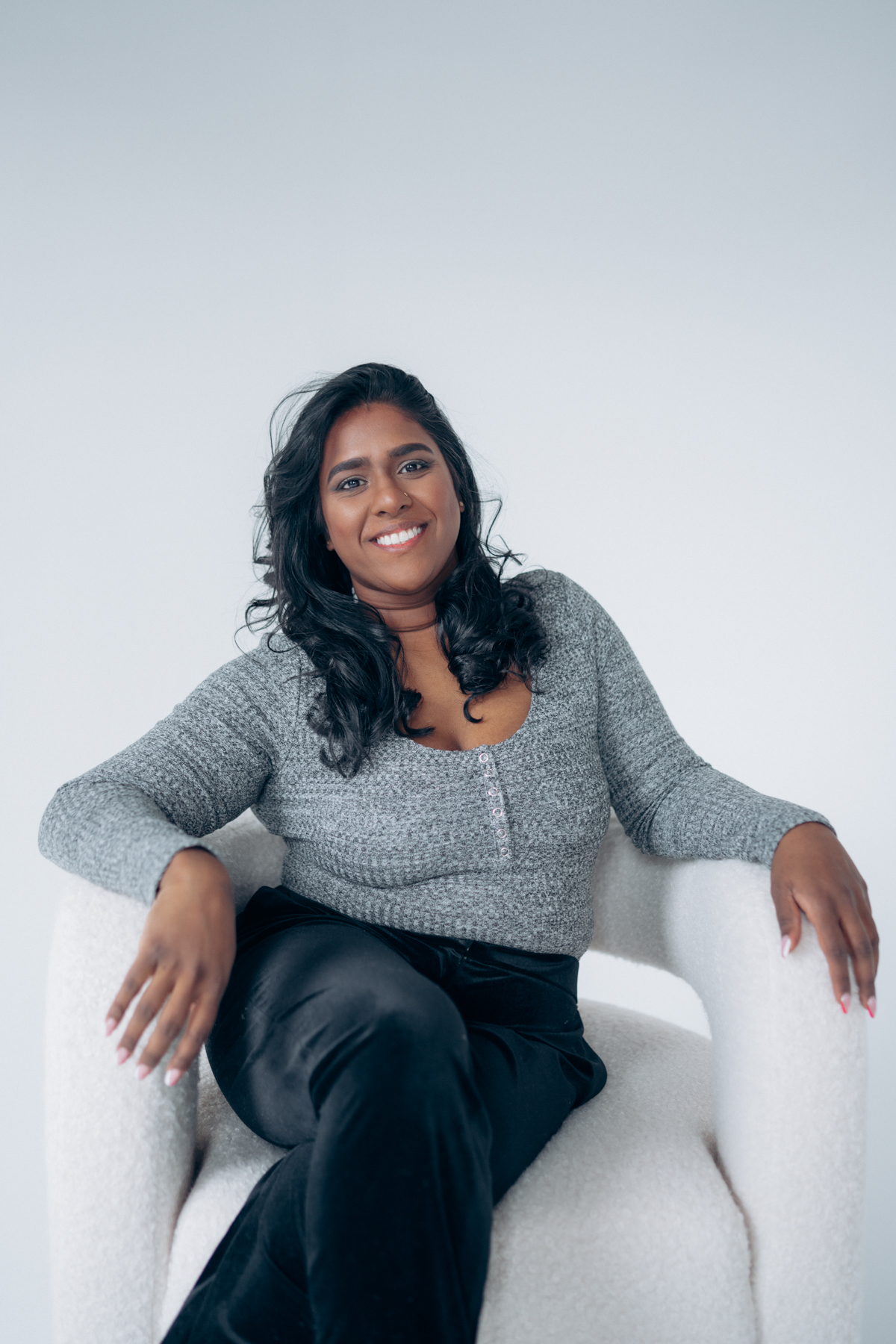
Latha Jay is a spiritual manifestation coach renowned for her unique fusion of contemporary insights and ancient wisdom. Drawing from a rich life experiences across diverse healing practices, she empowers individuals to recalibrate their perspectives, manifest their desires, and embrace greater happiness. She navigates clients through transformative lifestyle and mindset shifts, guiding them towards a profound journey of happiness, liberation, and love.
Beyond her coaching endeavors, writing pursuits, and quality time with her family, Latha immerses herself in continuous learning, artistic expression through painting, and embracing a perpetual state of curiosity, maintaining a beginner’s mindset across all pursuits.
Let’s dive deeper into discovering more about you. We’re curious to explore your unique hobbies and uncover intriguing aspects that may not be immediately evident from your online presence.
I actually have a bit of a random past. I traditionally went to medical school to become a doctor (MD). I did four years of undergrad, three and a half years of actual medical school. I left medical school in my last year before graduating, because I just didn’t feel in alignment with the profession. My whole life, I knew that my purpose was to support people, to help people. So when I told my Indian parents this, who were immigrants to America, who had worked incredibly hard their whole lives, they said, perfect…..Become a Doctor,
That was just their own mindset of what would work the best for their child. They wanted the best for me, of course. So I went to medical school, knowing that it wasn’t in perfect alignment for me, but I was like, I could tough through this, I could tough through this. But the first year, the first day of the school, I knew it wasn’t for me, but I just kept going, kept going, kept going, until I got to this breaking point when I was just like, I’m not going to make it if I keep going, because I’m so unhappy with my life.
I can feel the distance of my dharma of where I’m supposed to be in life, and where I currently am, and it’s painful.
I love that you’re saying this, people need to hear this. And so I would love to know what you did next.
One day I just walked out of medical school. I just left without really telling many people at all, got on a plane, and I went to Arizona where I served as a WOOF-er, if anybody knows what a WOOFer is. I participated in a program called the World Organization of Organic Farmers. At that time, I think it still existed as an organization. Basically, they connect you with an organic farmer, who will let you come and live on their farm, and they’ll feed you in exchange for five to eight hours of work on their farm.
That’s what I did, because I didn’t have anywhere else to go. I was scared to tell my parents that I didn’t want to be in medical school, they had invested a lot into me, time and money wise and everything, and I was terrified at what they were going to say. I didn’t want to let them down. I had gone to Arizona, I was kind of like, okay, well, this will be a surviving kind of thing. And after a little while, my parents kind of got in tune, and were like, what’s going on with you? And I came clean with everything. And they were just like, okay, just come home, let’s talk about it, just come home, we’ll figure this out. And it was the complete opposite reaction of what I thought was going to happen. Which was a beautiful blessing.
Looking back now at your journey, what advice would you give to your younger self ?
It’s all part of your journey – everything that you go through, every experience you have, is meaningful, even if you don’t end up finishing it. So many things that I learned in medical school, I use today, even though I’m not a doctor. So even when clients in the spiritual world come to me and talk to me about ringing in their ear, they’re feelinglike an angel is talking to them, I always tell them, let’s assess the physical ailments first. Is there something physically going on with you before we talk about the angel talking to you or something else happening to you.
I’m always in that space of, let’s merge these worlds of physical and spiritual together, and let’s be here. That’s kind of where I exist, but it’s been so helpful, even the way that I’ve learned to interview patients in medical school, and all the practicing that we did with patients about working with them and asking, you know, touchy or sometimes embarrassing questions. I learned so much from that. And that, I think, gives me an advantage when I work with clients, and we have to talk about some deep, dark stuff sometimes. And it just comes much more naturally to me, because I had all that practice talking to people about some deep, dark stuff that was going on for them.
Now when it comes to the work that you’re doing, walk us through, your personal journey, and really what allowed you to step fully into your dharma?
When I left the farm in Arizona, I didn’t know what I wanted to do when I got back to New York, but I knew I wanted to help people. So I started taking all of the courses, every course I could get my hands on, I started to take it. I started to pursue all of these different avenues. I started many, many businesses. I started a fashion line, a tech company, a t-shirt line. I just started company after company after company, and just ran them because I was like, I think I’m good at business, I should do this. And although I was good at business, What I realized was, that I was much better at teaching people about manifesting and about understanding their own shadows, and helping people in that manner. And also, it’s actually evolved and all those experiences, and business actually have been purposeful as well. Because now I support women in growing and manifesting through their businesses. And it’s like, perfect.
What would you say is your zone of genius today in terms of the work that you really specify in doing?
I love working with women. And I love showing them how powerful they are. And I love that when they leave working with me, they are more confident in who they are because of it. They know themselves better, they feel empowered, they feel more happy. And that’s why I do what I do.
Now when it comes to the current work that you’re doing, what would you say has been the biggest shift in your mind- set?
I think the biggest shift has been that I’m realizing it’s really important for me at this point in my career, in my life, to focus more on touching as many lives as I can. And I’ve been doing that by creating these incredible masterminds that are still so, so powerful. But it allows me to work with and interact with many people at the same time. And that’s been a huge shift for me. The Mastermind structure is also beneficial as the people in the group get to meet and get to know one another as well. It turns into so much support and a powerful group of people cheering you on.
Walk us through your offers. So anything coming out for 2024 and things that we can promote as well in, you know, with this issue?
I am offering GOSS a special mastermind opportunity! Its really for anyone that wants to step into their power and get shit done in their life. Its for business owners who are looking to make more money, influencers and media personnel who have big dreams they want to achieve, moms who want a better life/work balance and everyone in between. I love the customization and intimate interactions that happen in a Mastermind, so many goals get accomplished and its so different than an online course. Online courses are sometimes great, but most people get them and end up loosing steam before finishing them, but when you are in a Mastermind there is accountability and support that keeps you going.
What would you say is your soulmate client for this mastermind?
My soulmate client is a woman that is looking to grow her business or empower herself, is ready to really step up and make more money and feel confident in who she is and how she really occurs in the world. I work with women that are in beginning, middle and more senior stages as well.
Now let’s manifest. As you know, we are all about manifesting in this issue. What are you calling in now?
I have a lot of things that I’m actually calling in now. I usually don’t talk about things I am manifesting until they come to fruition. But I will say that I am manifesting the creation of an incredible book right now.
What are the rules, rituals or things that you, practices that you have to create an abundance mindset?
I think that truly starts with dealing with your shadows. Sometimes people kind of go into the ritual aspect of creating abundance in their life without dealing with the shadows. And when you do that, the shadows keep popping up. So it’s almost like you’re trying to swim against the current and it gets really, really hard. But when you’re properly doing the shadow work and you’re working on those limiting beliefs that are coming up for you, you’re able to get much further because you’re not swimming against the current. Its more like you are riding a tube down a lazy river. It’s carrying you, you are being propelled. You’re going where you gotta go.
Do you have a sacred morning or like a nighttime routine that really sets you up for the day?
I actually like the monthly routine, I am very coordinated with the lunar cycle. So I make sure that things, depending on what I have to do, like even this interview, I made sure that today’s the new moon and that’s the day for empowering things to happen. It’s the day that you set your manifestations. It’s the day that you step into creation.
I always try to do that as much as possible. I also try to look at the Farmer’s Almanac to see the best days that are most energetically aligned with what I’m doing to give assistance. But it’s actually something that I grew up with, my grandmother always used to do that too. If we were going to buy a new car or a big purchase like buying a new home or whatever the case was, she would always look to see what the good days were, the most auspicious days.
Do you have a magical formula for living a harmonious life?
The game-changing strategy I’ve stumbled upon, particularly since becoming a parent, is the power of scheduling. It might sound amusing, but I’ve discovered that I can tackle anything if it’s meticulously scheduled, yet I struggle to accomplish even the simplest tasks without a structured plan. Without this framework in place, life can feel overwhelming, and I’m left feeling like I’ve fallen short. Thus, scheduling holds immense importance in my life.
In sync with this scheduling ethos, my husband and I ensure our calendars are aligned. By sharing and being aware of each other’s schedules, we effortlessly coordinate our family’s activities and commitments. Whether it’s our children’s classes or sports, designated date nights, or understanding each other’s busy days, our family operates with a sense of mutual respect for individual time while nurturing our collective bonds.
In managing other aspects of life, such as carving out time for date nights or one-on-one moments with our children, we prioritize intentional scheduling. I firmly believe in fostering a “life work balance” rather than the conventional “work-life balance,” where my life takes precedence over work. This intentional phrasing underscores my commitment to prioritizing what truly matters – my life and the meaningful connections within it.
Are there any last words, things that are coming through that you’d like to share with our audience?
I truly believe that life, spirituality, and physical well-being are deeply intertwined—they’re not separate entities. This conviction stems from my Ayurvedic training and background, where the holistic approach emphasizes the connection between body, mind, and spirit. In Ayurveda, the analogy is often made that by nurturing the root (the body, mind, and spirit), we can enjoy the fruits of a fulfilled life. This philosophy extends to all aspects of existence. Whether we’re caring for our physical health, nurturing our spirit and soul, or tending to our professional endeavors, it’s the synergy of these elements that cultivates a rich and beautiful life.
Maintaining balance across these dimensions is paramount. Neglecting one area can diminish our overall well-being and hinder our ability to experience joy and happiness. It’s about embracing all aspects simultaneously, recognizing that they cannot be separated. This principle underpins my coaching approach. I believe that providing comprehensive support across all facets of life enables clients to truly thrive. My goal is to empower individuals with tools and insights that they can carry forward, enriching their lives for the long term.
Photography by Tanya Kulesh
Get your hands on the latest tips and tricks of what it means to be a #GOSS. In this free e-book you will dive into 11 business traits that will help you grow your business!
11 Ways To #BeGossy E-book
FREE DOWNLOAD

Find out more inspiring stories from women worldwide of all industries. Follow us on Instagram @GossMagazine.
website design Credit
© Goss Club Inc. 2024 | all rights reserved |
Inspiring & empowering women worldwide.
© GOSS CLUB INC. 2024 | all rights reserved
Share to: